
Dear Voters of India, Where Do We Draw The Line Between Welfare and Freebies?
Folks, it’s election season! Elections bring speeches, slogans, manifestos - all which hold a long list of bold promises. These electoral promises are not random. They are designed to persuade, mobilize, and win trust. But are all the promises bound by the same goals and intention of growth of all including state and nation? Well, that’s for us to figure out. However, over the last few decades, two main broad categories of electoral promises have come into the limelight which seem to influence elections the most, at both, the state and national level: welfare schemes and freebies.
Let’s start with the basics: What is welfare?
Welfare refers to an individual's or group’s overall health, happiness, and well-being. It focuses on safety, security, and quality of life.
You see, India is a mixed economy which means its economic and social structure is built on welfarism through capitalism. The Indian constitution establishes India as a welfare state through Articles 38 to 47 in Part IV which consists of the Directive Principles of State Policy. This essentially means that India follows a system of governance where the government's chief responsibility is providing for the social and economic security of its population to meet their basic needs. While Article 38 specifically mentions that the State shall strive to secure a social order for the promotion of welfare of the people, other articles mention key basics necessities such as adequate livelihood, equal pay, right to education, nutrition and access to legal aid etc. However, this is a Directive Principle of State Policy which means that it is only a guideline for the governments in power but non-enforceable in courts.
Furthermore, what is key, enforceable and a fundamental right for all of us is Article 21: No person shall be deprived of his life or personal liberty except according to procedure established by law. This is one such article that cannot be suspended even during a National Emergency. While the article holds simplicity when you read it for the first time, it holds immense importance to our daily lives. Over time, the Indian judiciary has even expanded the scope of this article beyond the imagination of the Constitution makers. Over the last few decades, this article, through legal interpretation has been expanded to include food, clean water, clean air, healthcare, social security, education, opportunities, legal aid and even the right to die with dignity.
IMPACT OF WELFARE SCHEMES
Welfare schemes tend to have a "multiplier effect." The multiplier effect is an economic concept where initial spending, in this case government spending, leads to a larger final increase in a nation’s GDP.
For example, the Mid-day Meal Scheme launched by the Government of India in 1995, was inspired by Tamil Nadu. which introduced a mid-day meal programme in 1925. By 1960’s, under the vision of K Kamaraj, the programme became a statewide reality and by 1991, 12 states in India had followed suit. The scheme is the world’s largest school feeding programme that provides free cooked meals to over 11-12 crore students of government and government-aided schools.
When it came to Mid Day Meal Scheme’s multiplier effect, it was successful in addressing “classroom hunger”, boosting supplementary nutrition, increase in school attendance, enrolment and lowering dropout rates. The scheme was also an economic relief for low-income households as the afternoon meals of children were taken care of. The greater picture? Educated kids unlock better opportunities, stronger nutrition builds healthier bodies, improvement in household economics, greater participation in nation’s growth; that's the high multiplier effect in action.
That's just one simple example with its multiplier effect undeniable, the same story can be traced for hundreds of other welfare measures. Therefore, good welfare schemes with good implementation is an individual’s pathway to freedom, economic growth and empowerment. Multiply this at the national level and you have the pathway set for national success.
FREEBIES: WHAT ARE THEY?
The word freebies technically means goods, services or benefits provided free of charge. Sounds a lot like welfare, yes? Then why does it spark some debate and discussions, both online and offline?
Well, for starters, calling freebies just “free stuff” is very simplistic without factoring in its consequences and multiplier effect. As the RBI stated in 2022, “While there is no precise definition of freebies, it is necessary to distinguish them from public goods, such as the Public Distribution System, health and education-related schemes, employment guarantee schemes, and so on.”
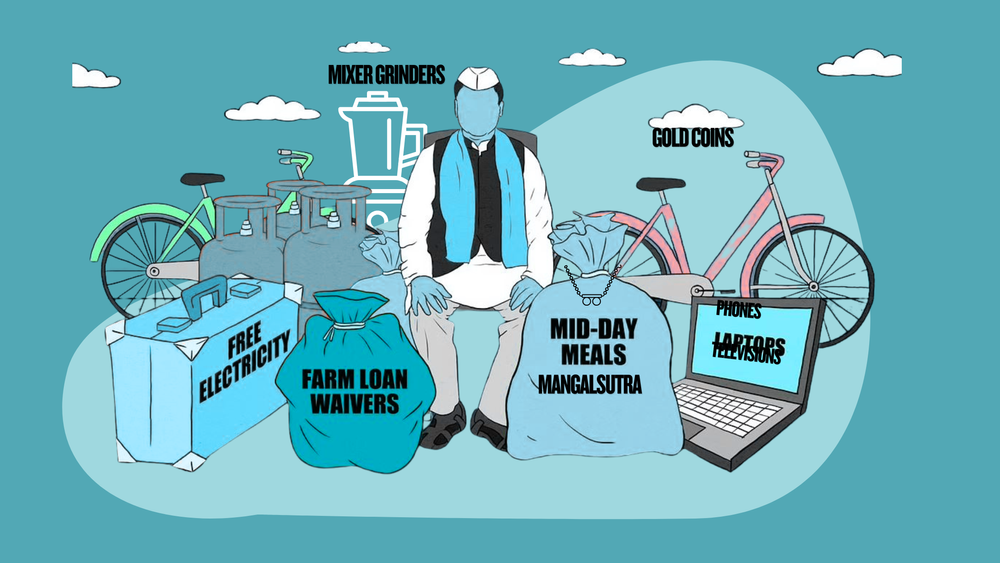
Why did the RBI say so? Well, welfare schemes related to PDS, education, health etc. all focus on basic needs. But freebies? Well, they do more than just meeting basic needs. Where welfare schemes provide people means and/or the ability to BECOME CAPABLE to achieve the individual needs beyond the basics, freebies tend to become the means to meet those higher needs directly or are the higher needs itself. Freebies include utility waivers such as free electricity (up to as high as 250 units in some states), consumer goods like laptops, smartphones, bicycles, mixers, grinders, fridges, TVs and direct cash transfers for specific groups are often doled out before or during election campaigning these days. All which are over and above the basic needs criteria if we keep the standard same for everyone.
Therefore, while freebies do have a lot in common with welfare schemes and hence are often used interchangeably, it is important to remember that welfare schemes can be considered freebies but all freebies are not welfare schemes.
Though some of these freebies serve essentials like health, water or electricity, the problem here is the “free” part of it all. Rather than building citizens’ ability to pay for electricity or bus rides, freebies end up giving away things for free without focusing on creating a strong ecosystem which would not require people to get things for free; because nothing is truly “free.” Therefore the next question should ideally be, what’s the cost of these freebies and is there an impact we might be missing out on considering? Let’s get right to it.
The Impact of Freebies
When we consider studying the cost and impact of freebies, we broadly need to consider the 3 key players involved:
- The Voter: Who is the freebies' beneficiary or non-beneficiary
- The Political Parties: Who promise freebies before elections
- The State Exchequer: Who bears the cost of the promised freebies once political party is elected and in government
The Voter and Freebies
Freebies give all good feelings when it comes to its beneficiary since it's free. However, there are some hidden downfalls too. To start with, a sense of dependence settles in the mind of voters when freebies are handed out election after election. Moreover, since some freebies are handed out right before elections, they create a recency effect in the mind of voters and impact their voting choices. Therefore, your typical voter habituated to freebies would tend to look at what the government will give, over what and how the government will do for long term growth of an individual and the region as a whole. Afterall, freebies tend to be temporary lollipops for voters. But it doesn't end there, freebies tend to have a counter effect also on voters who are not the beneficiaries of the freebies, which is not positive by any stretch.
Let’s understand both the positive and negative impacts through the example of free bus rides for women that was introduced by the Congress Govt under the Shakti Scheme in Karnataka (2023). As per a Lokniti-CSDS state-wide survey of fifteen districts in Karnataka with a sample of 6000+ female beneficiaries, the scheme had achieved over 90% penetration among lower-income women, with over 80% saving up to Rs 500 per week. Moreover, 34% of women from Bengaluru urban reported new or improved employment, with 26% having secured new jobs. It’s safe to say that this scheme enabled women beneficiaries to save money and be more independent in terms of mobility.
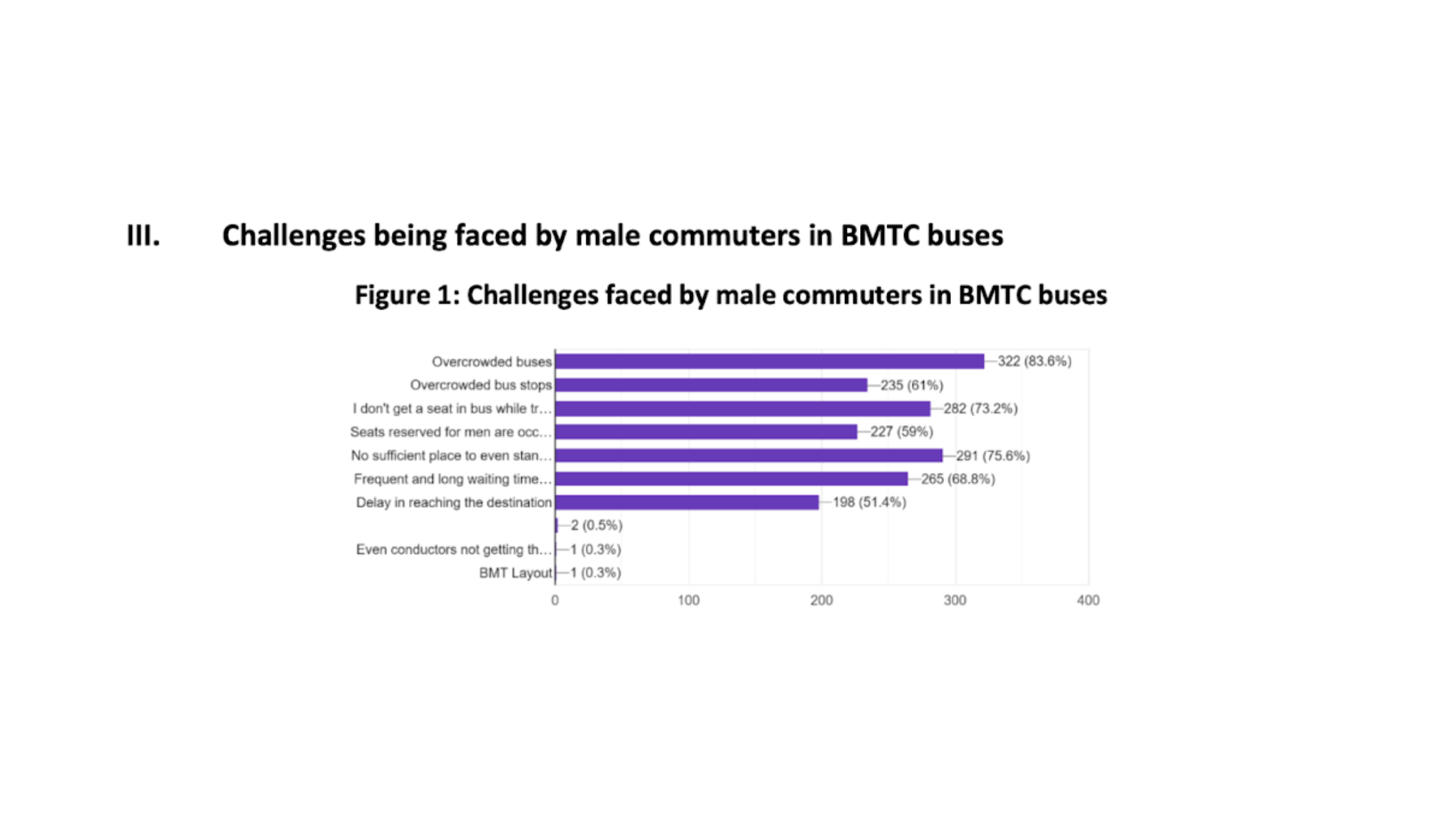
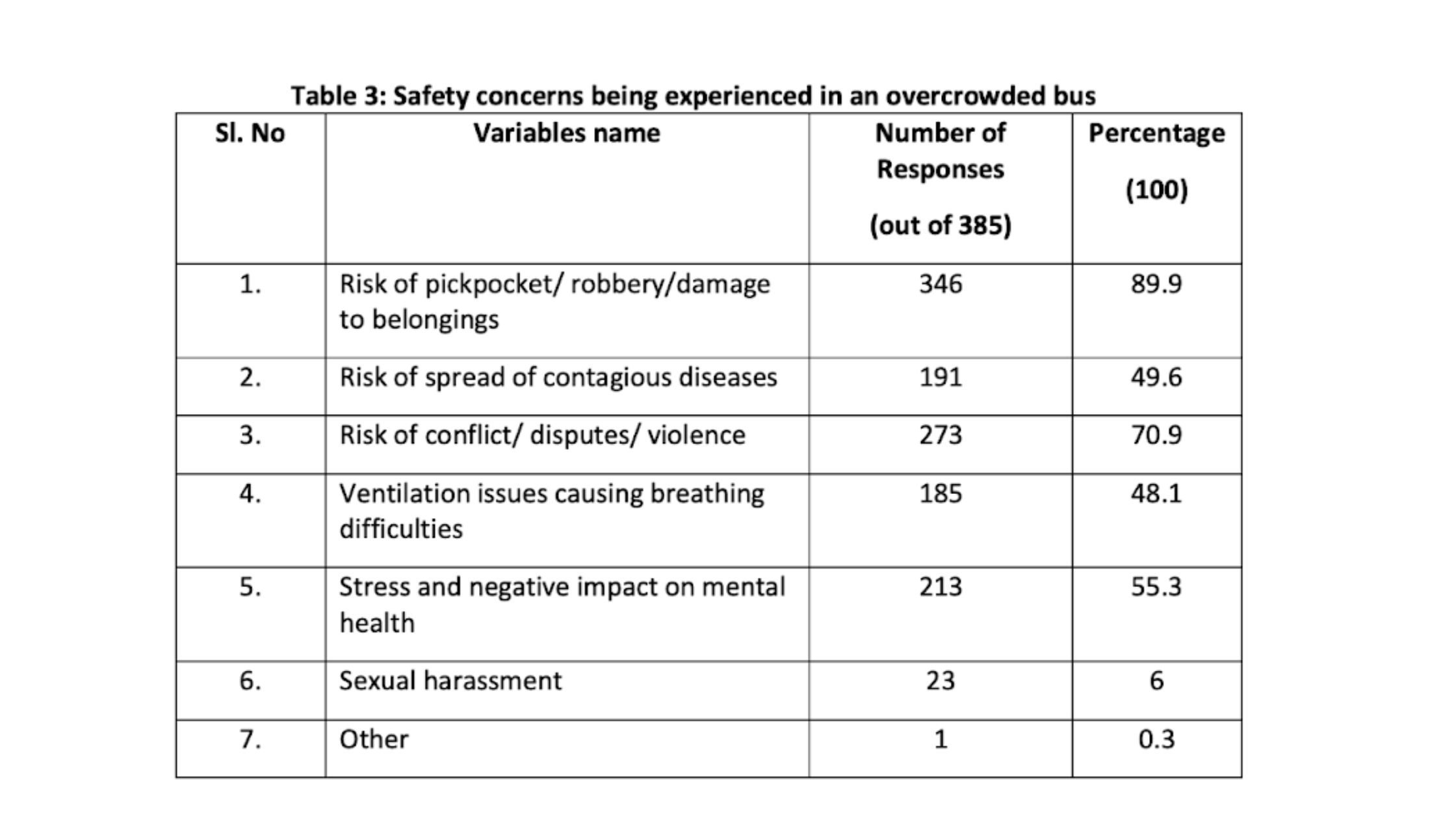
However, on the flip side, free bus rides for women soon resulted in overcrowded buses, lack of sufficient buses, increase in taxi and auto fares and inevitably bus fare hikes - Karnataka witnessed a 15% hike in 2025. Overcrowded buses became a daily challenge for majority male commuters as demonstrated by a 2024 survey that surveyed 385 male BMTC bus commuters in Bangalore. Moreover, overcrowded buses also meant other issues like conflict, increased stress, thievery, lack of ventilation, sexual harassment etc. as demonstrated by the same survey.
Let’s now come down to political parties and freebies.
In 2022, PM Modi criticised the freebie culture by calling it “rewadi culture.” Yet, BJP, like all other parties does announce certain freebies before elections. When one wonders why such hypocrisy, a closer look at the electioneering culture tells us that political parties now are competing with each other on the basis of these freebies just as much as candidate selection based on caste or even religion has played a role over the decades.
You see, a 2021 Lokniti survey conducted among 4354 voters in Tamil Nadu found that over 52% of respondents found free goods and services to be important in influencing their voting decisions. Similarly, a nationwide survey in 2019 involving more than 2.7 lakh people revealed that for 41.34% respondents, distribution of liquor, cash and freebies was an important factor behind voting according to the Association for Democratic Reforms. Therefore, parties today collectively have agreed that they have no choice but to give in to this competition. Sure, the number of freebies offered might differ based on political parties ideology, vision and governance plan but freebies competition is undeniable.
Therefore, freebies have skewed the political game and added a curve ball to the concept of free and fair elections. It’s made it a game of one upping each other during election campaigning and making it a race of who gives the most free. Thulam Saravanan would know. He was a candidate contesting from Madurai South in the 2021 Tamil Nadu assembly elections, who promised a mini-helicopter, Rs 1 crore and a Rs 20-lakh car for every household, gold jewellery for married women, a 100-day trip to the moon and a 300-foot artificial iceberg to cool the constituency. As funny as it sounds, it tells us how far the game of freebies can go if parties or candidates put their minds to it.
And as the freebies game continues, the biggest mistake that political parties tend to make is the mistake of not weighing the state exchequer and long-term effects of the freebies they promise. This brings us to the final impact:
The impact on the state exchequer.
When it comes to freebies, Political parties don’t have to worry about party finances since freebies come from the state treasury funds. When these freebies go too far, the state exchequer suffers. The relationship between a state’s fiscal health and freebie expenditure becomes toxic when political parties risk the state's financial discipline to win elections using freebies. Let's take a 2024 study to break this down. The study analysed India’s trends of electoral freebies and fiscal deficits in India between 2010 and 2023:
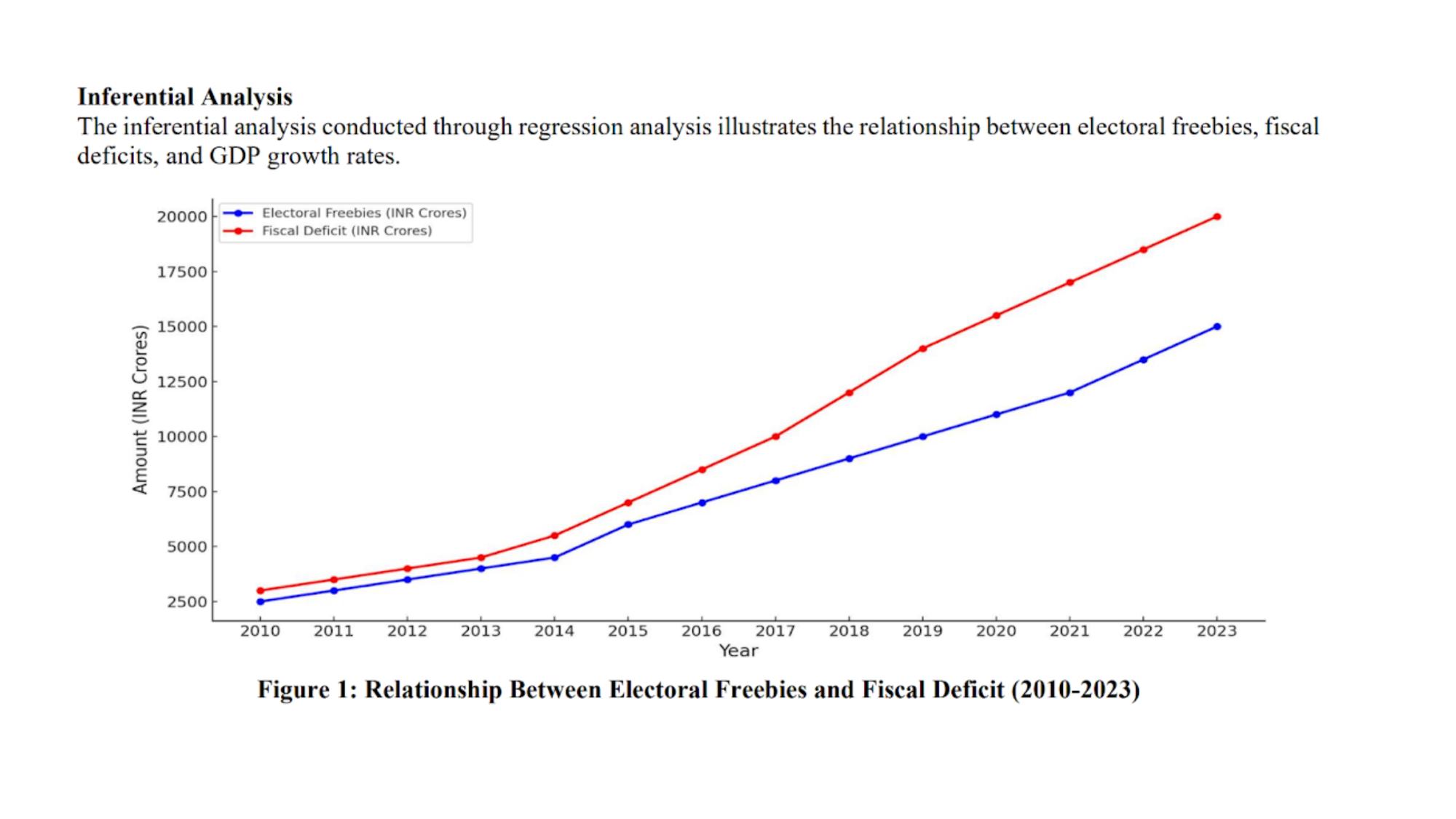
As per this graph shown here, freebie allocation stood at about ₹2,500 crores in 2010 and rose to over ₹12,000 crores+ by 2023. The fiscal deficit, or the shortfall that occurs when a government's total expenditure exceeds its total revenue (excluding borrowings) saw a steady increase from ₹3,000 crores in 2010 to ₹20,000 crores in 2023.
Let's see this from a state lens. Karnataka for instance, which used to be a revenue surplus state in 2023-24 by Rs 402 crore, had spent over Rs 97,813 crores on the five guarantee schemes in just 2 years by 2025 . As per a CAG report in 2025, this led to Revenue Deficit of Rs 9,271 crore, and the state’s capital expenditure fell by Rs 5,229 crore, causing incomplete projects to surge by 68%. Lack of projects would in turn result in decrease in employment which in turn would decrease the revenue generation as a state.
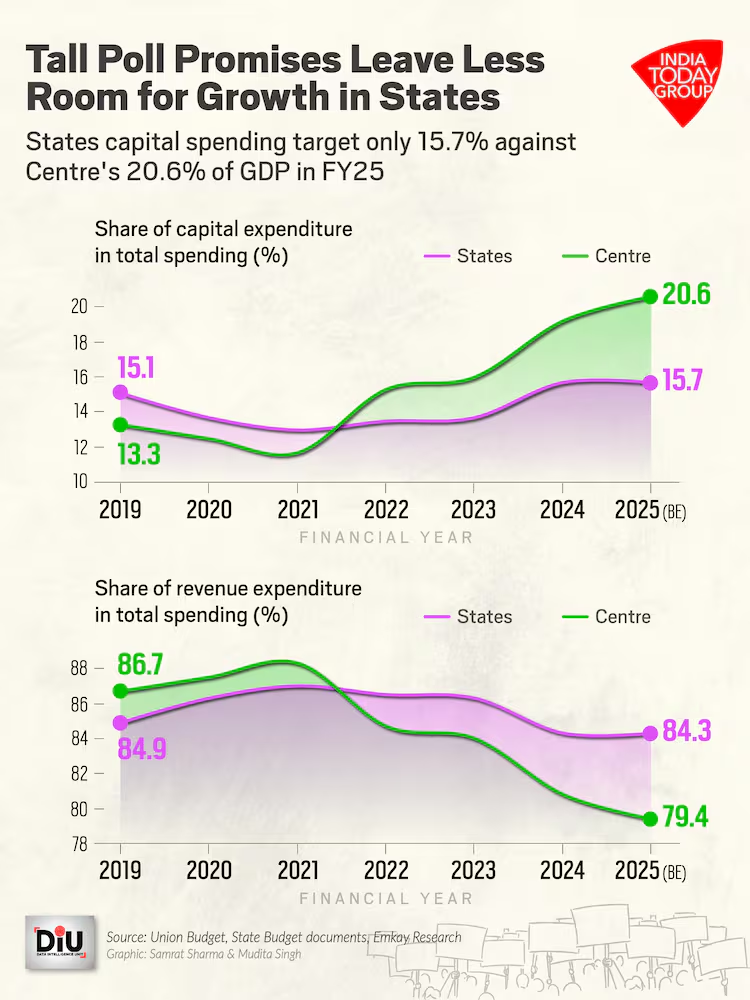
Similarly, Telangana, a state whose total debt stands at Rs 8 lakh crore as of December 2025, heard its CM Revanth Reddy himself say “I have no money for capital expenditure.” He added that there must be nationwide discussion on the feasibility of welfare guarantees. In his words, “After I sat on the Chief Minister’s chair, I got to know the truth.” A stark admission, indeed. So it turns out the impact on state exchequer is not just in the form of increasing state debts and fiscal deficits , but also lowering capital expenditure on infrastructure, industries and GDP contributing sectors, therefore increasing unemployment and lowering growth rates.
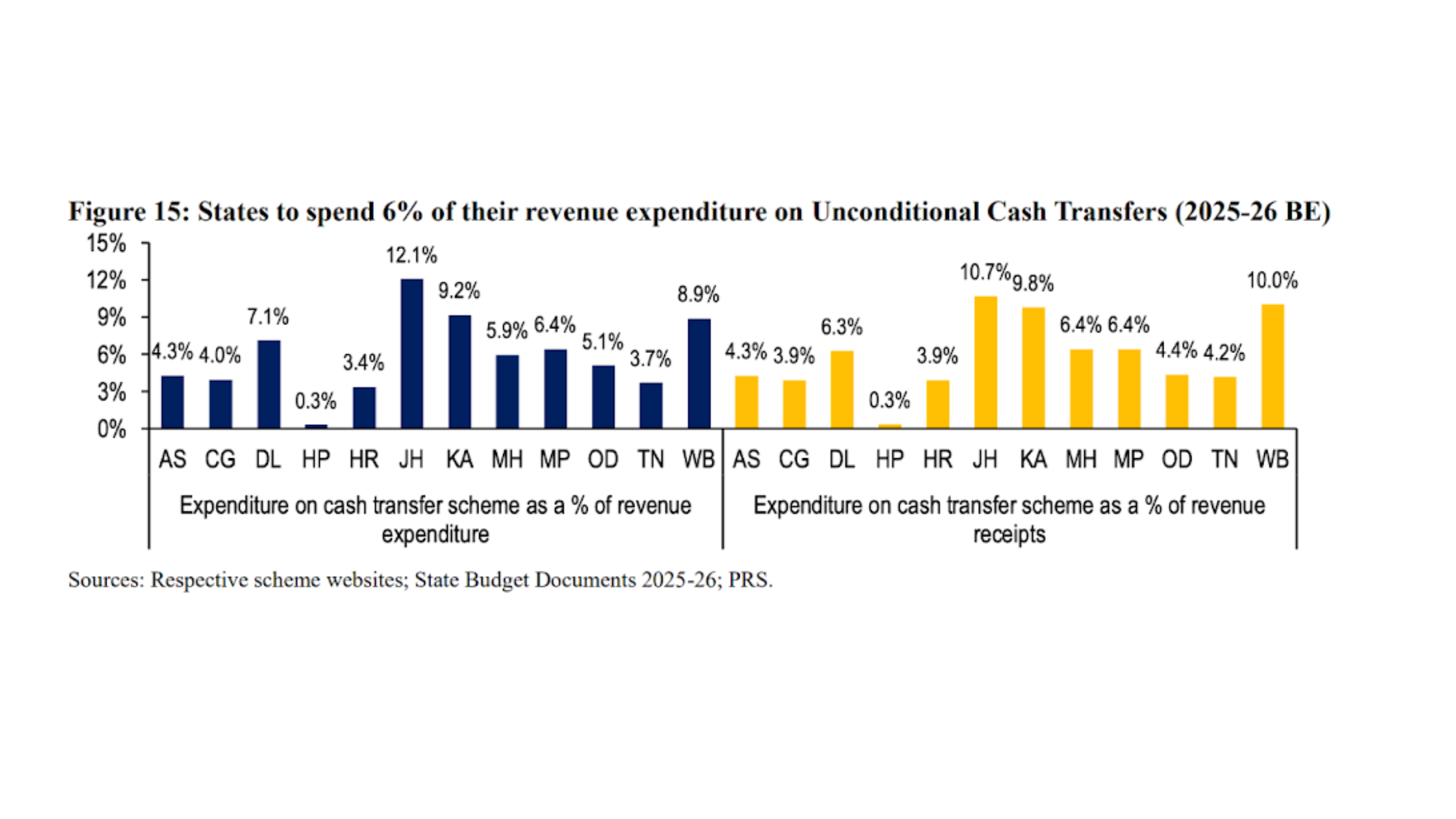
Moreover, recent state elections (Karnataka, Telangana, Madhya Pradesh, Delhi) saw "guarantees" involving monthly cash transfers to women. Though these cash transfers offer assistance and a sense of economic agency, its multiplier effects are yet to be determined as the evidence is still negligible. However, what we do know is that these cash transfers take up 6% of states revenue expenditure, and even exceed 8% in states like Karnataka, West Bengal and Jharkhand.
The freebies contest and impact has even forced the Supreme Court in February 2026, to criticise the practice of announcing freebies before elections, claiming that it discourages willingness to work among people. While the Election Commission of India (ECI) had affirmed in 2024 that it cannot fully regulate the policy decisions or election promises of political parties nor freebies defined as “corrupt practices”, but it has been pushing for parties to disclose the the financial health of the state and the financial feasibility of their promises to the voters. This however, is not a hard and fast rule, nor has any government brought in laws related to freebies to fix these loopholes.
Therefore, amidst this competitive race for bartering votes with freebies and still waiting on its multiplier effect to prove all pessimists wrong, how do we as voters analyse schemes smartly? Here’s what you need to take away.
Where Welfare Ends and Freebies Begin
Political parties offer voters a preview of their vision in manifestos ahead of an election. While freebies make the rally speeches and news headlines, welfare quietly simmers in silence in the pages of the manifesto booklets. But how do we differentiate between the two? Here’s four key points for your reference:
- Freebies tend to be beneficial for a short duration whereas welfare schemes tend to be beneficial for a longer duration. Take appliances like mixers or refrigerators- they’d last for a few years whereas welfare schemes that ensure food and water security have a life-long impact as mentioned earlier.
- Economically, freebies have a high “consumption effect” rather than a multiplier effect in case of welfare schemes. This means that not only are freebies consumed quickly but they also eat up the state exchequer just as quickly- especially when a state is not financially sound to afford the promised freebies. For instance, the DMK announced the “Illatharasi Coupon” scheme, offering Rs 8,000 worth of coupons to nearly 2 crore non-income-tax-paying households. On the other hand, a welfare scheme such as the Pradhan Mantri Awas Yojana mandates that the house constructed or purchased with central assistance must be in the name of the female head of the household or in the joint name of the husband and wife.
- While welfare schemes focus on societal development by providing basic needs to ALL, freebies tend to focus on fulfilling higher needs for SOME i.e. they tend to be targeted to consolidate votebanks. These votebanks include women, youth, farmers, religious or caste groups and so on. For instance, the Aam Aadmi Party (AAP) government in Delhi provided 20,000 litres of free water monthly to households with functional water meters for low-income groups and tenants in 2013. If usage exceeded 20,000 litres, the entire amount would be billed. However, a welfare scheme would ensure tapped water is provided to all households.
- Welfare schemes provide slow gratification, freebies provide instant gratification. The multiplier effect of something as basic as a mid-day meal is experienced in the years to come, while freebies like tv, cash doles, sarees and dhotis bring immediate joy with little to no multiplier effect.
This is where your role becomes important in understanding if the promises are realistic, feasible and offer long-term success both to you and the state you reside in.
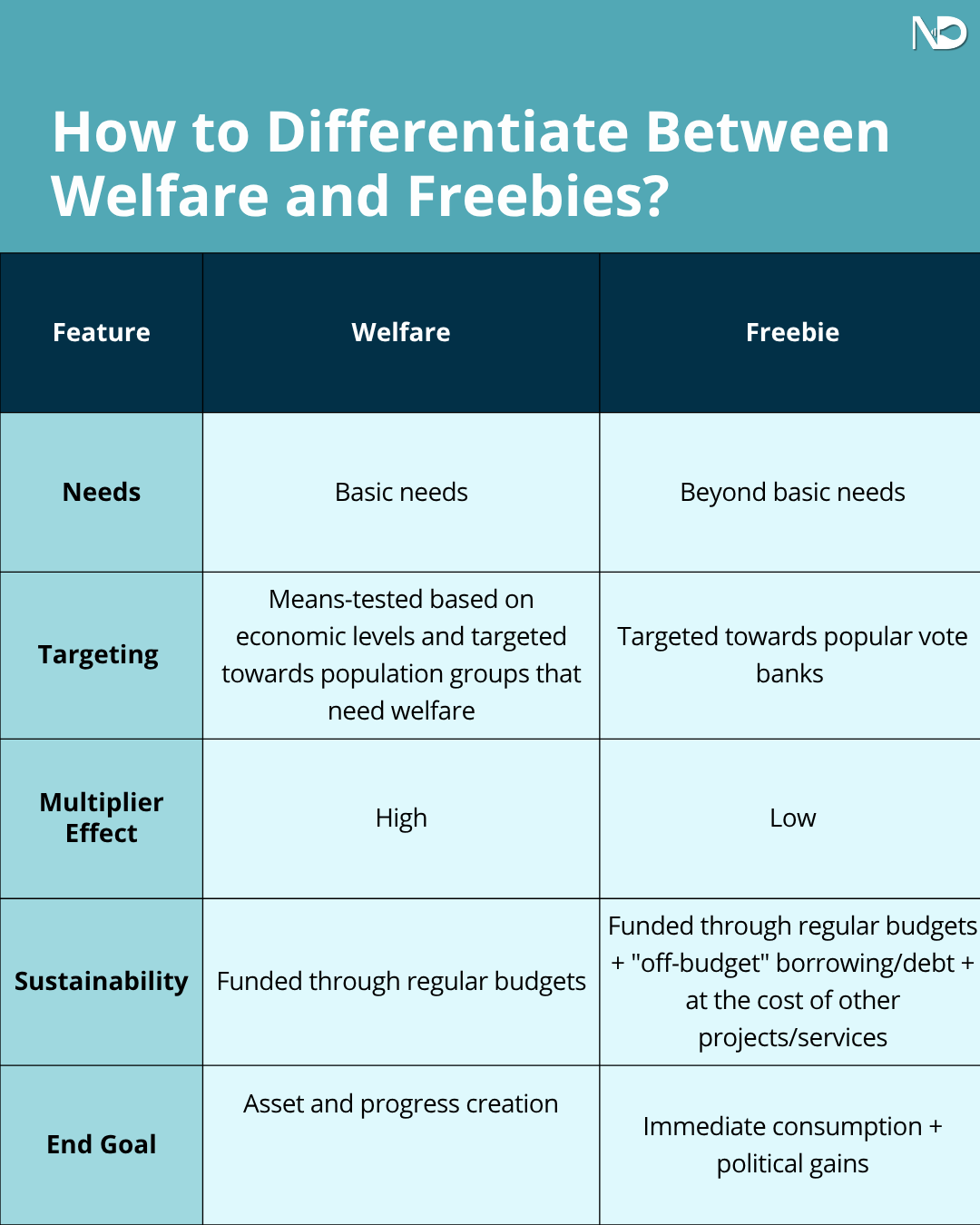
Make sure you keep this matrix handy and start analysing promises termed as ‘welfare’ against this matrix to see where it lands you. So, where do you draw the line between welfare and freebies? Drop your thoughts below.